The Mercedes Sauber C11: Dust and Silver
The Instytut Energetyki in Warsaw is a place normally associated with something entirely different from cars. Industrial interiors, concrete walls that remember the days when Poland was still socialist. A venue known for techno concerts, where the bass hits your diaphragm with the force of a Saturn V launch. It was here, in this surreal setting, that one day an object from a completely different world appeared.
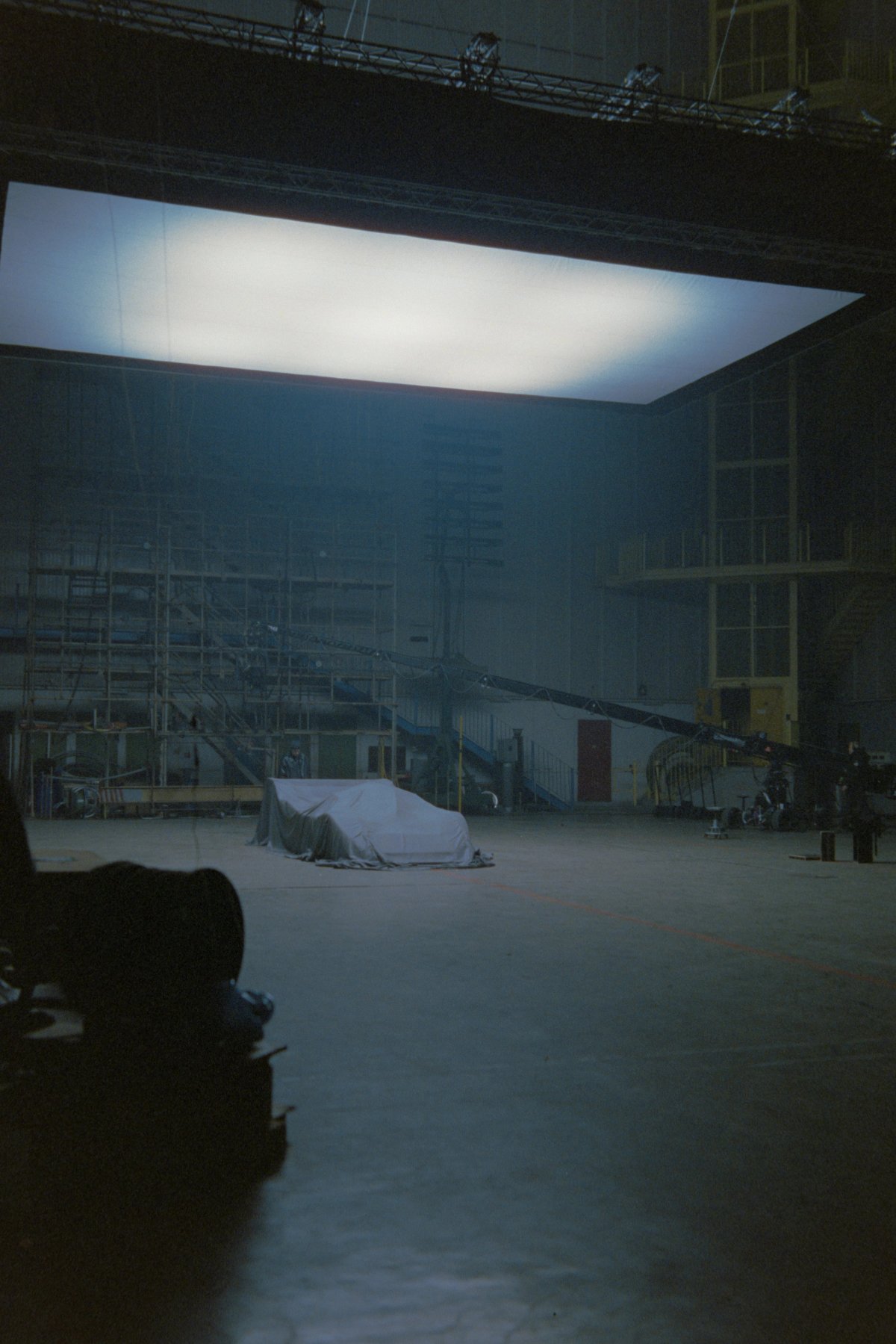
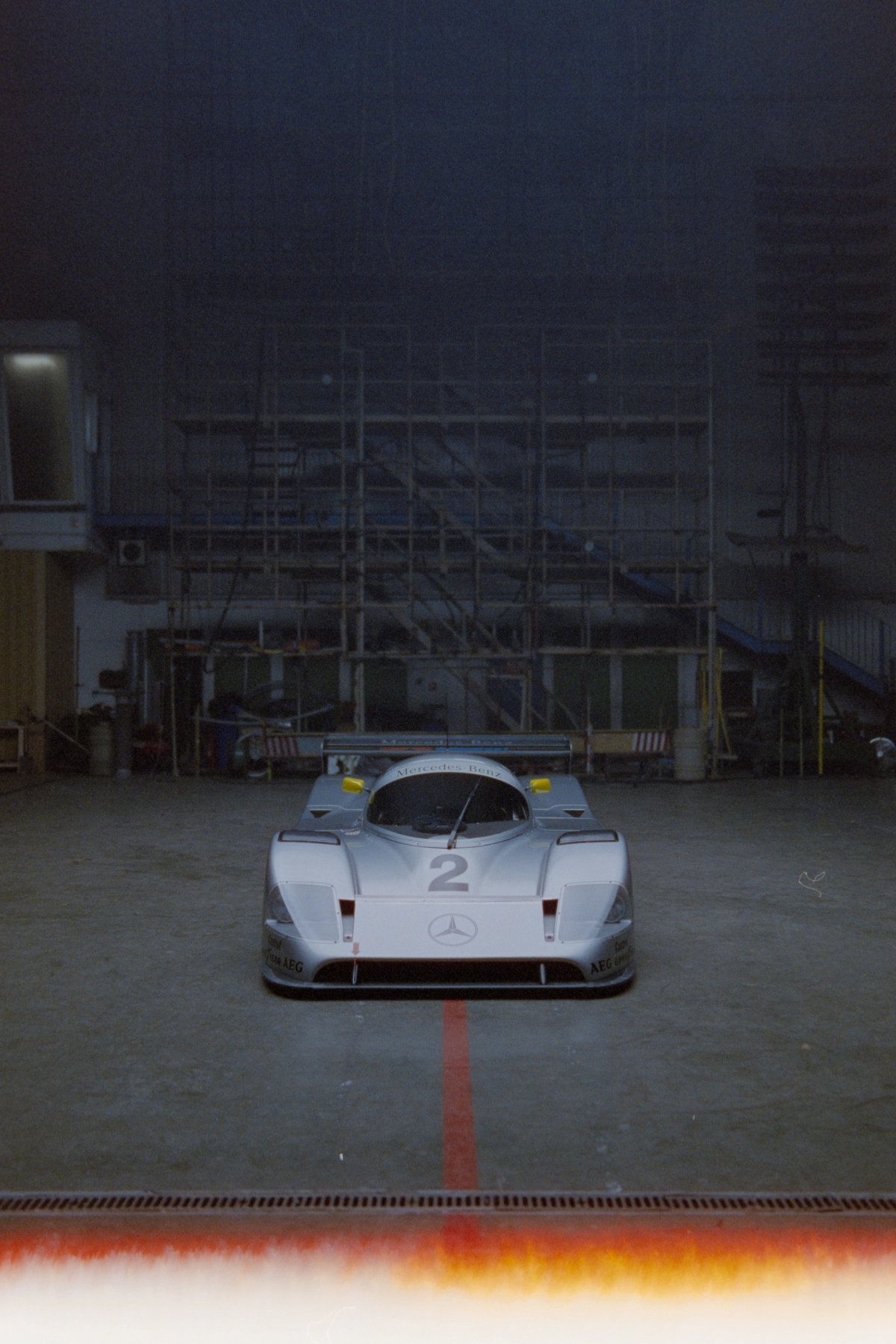
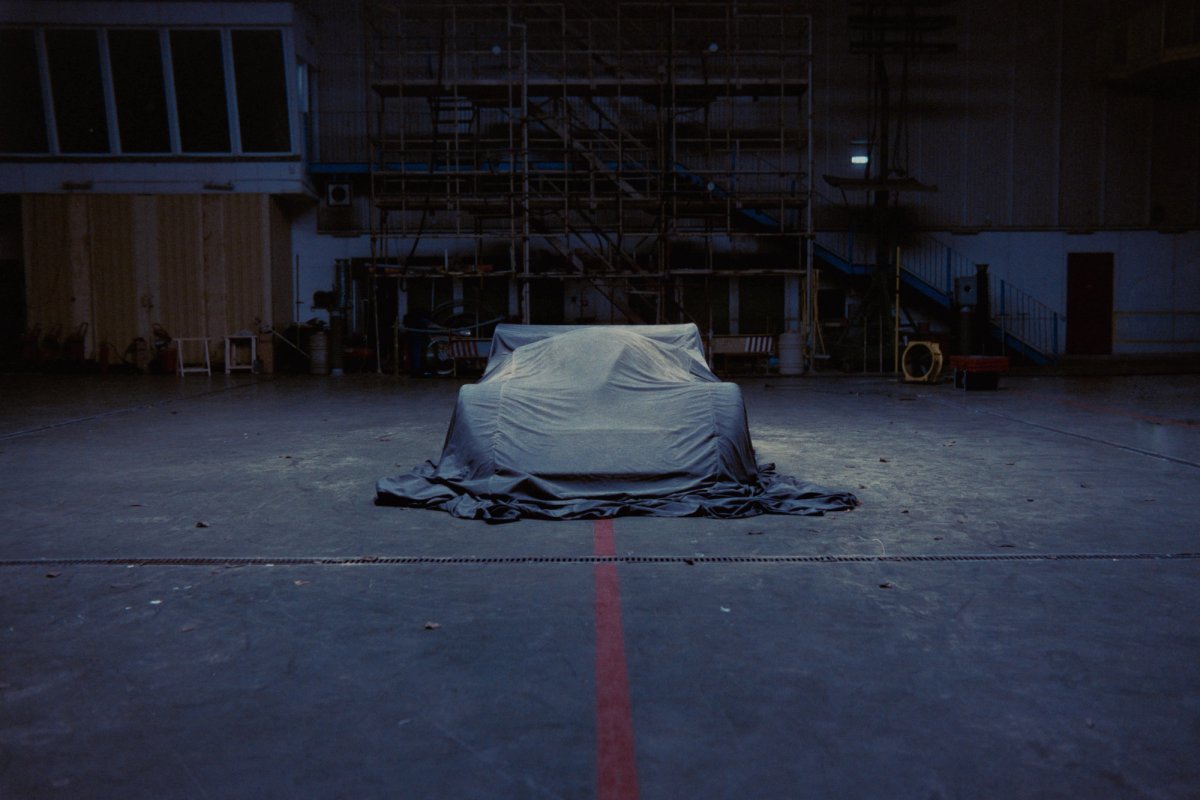
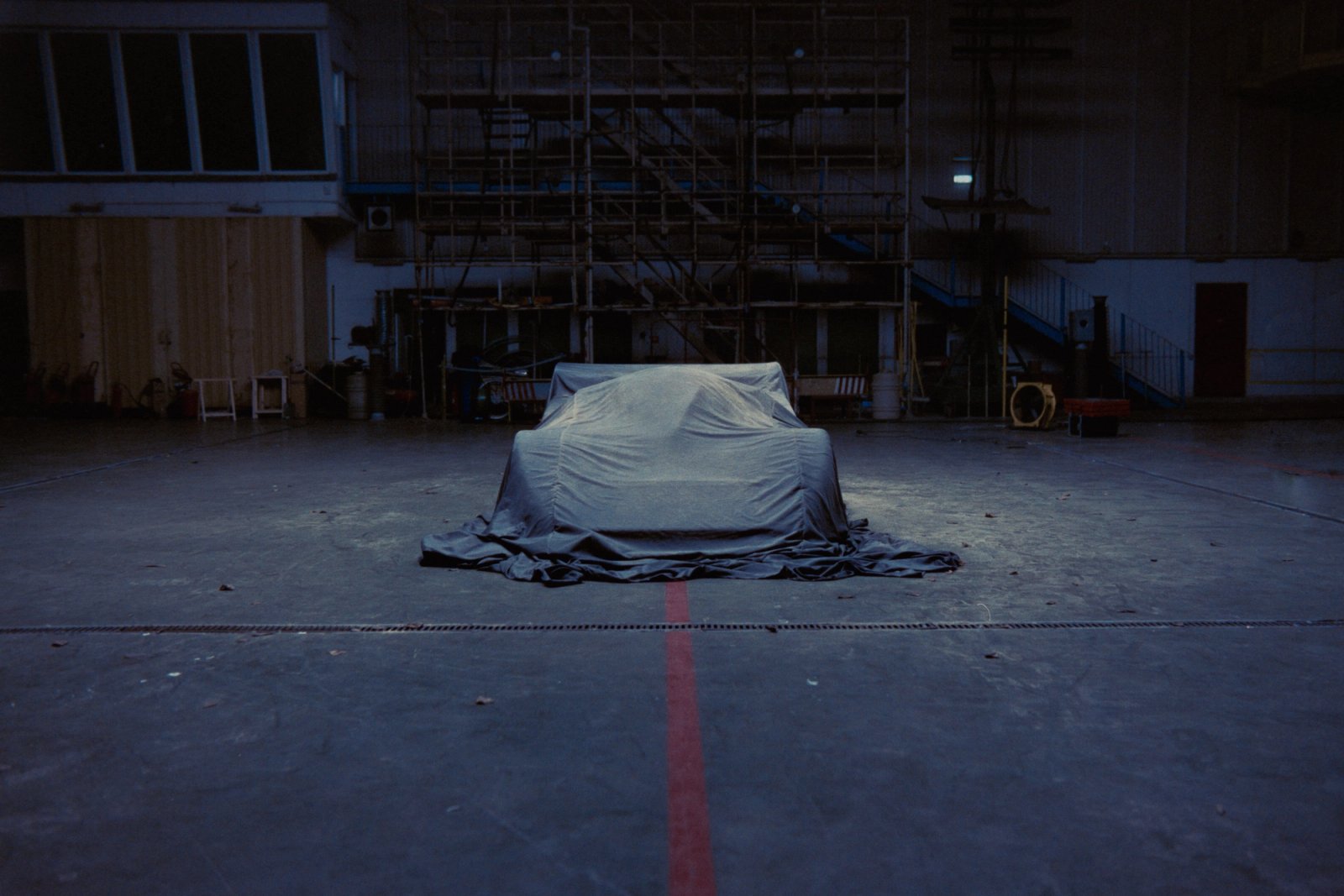
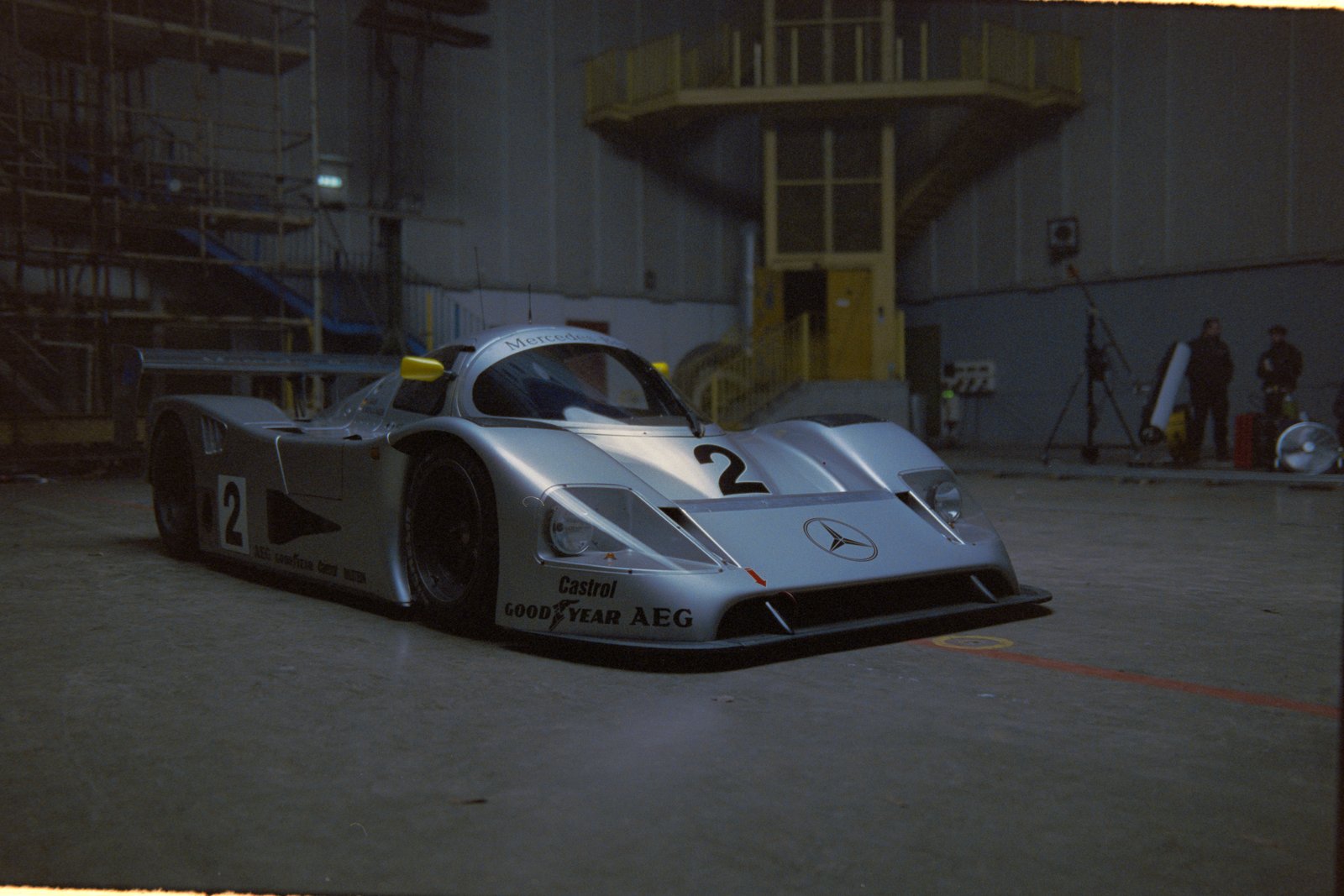
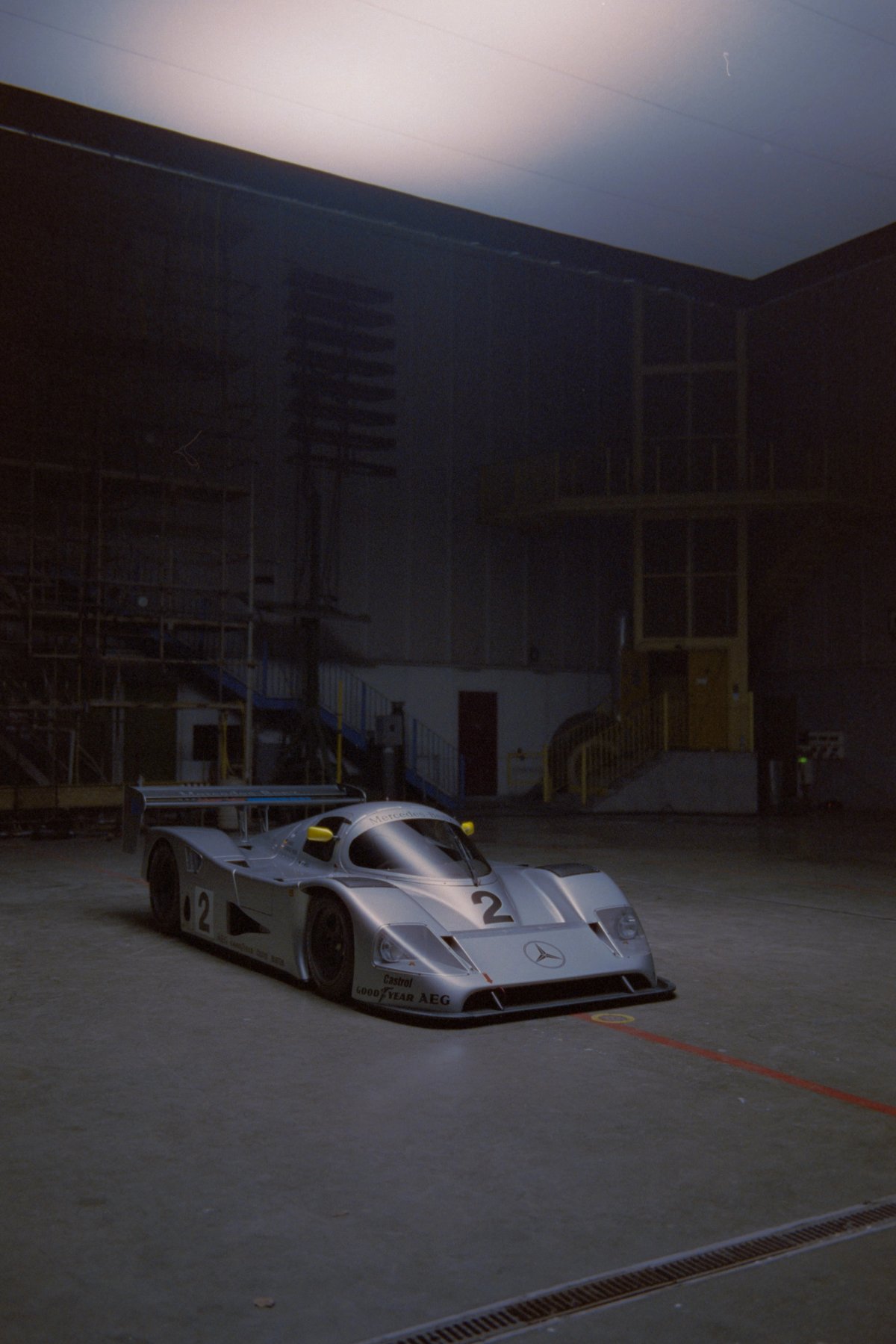
Silver. Low. Aggressive even at a standstill. With the number 2 on the side and a black three-pointed star painted on the bonnet. It stood under a dust-covered sheet. When the fabric fell, the C11 looked like a mythical barn find, a car pulled from a forgotten shed after decades of absence. The reality was different. The car had come straight from the Mercedes Museum in Stuttgart, and a film crew was shooting material for Ultrace on 35-millimetre film. Because some legends deserve to be treated in a manner befitting their status.
This is the Mercedes Sauber C11. The car in which Michael Schumacher learned how to win. And the car that for two days stood in a place where people normally dance until sunrise.
There are cars that, once their careers are over, end up behind a museum rope. Polished, motionless, dead. Exhibits to be admired by tourists with phones. And then there are those that refuse to retire. That after years of wringing the engine into the red zone, after battles fought on circuits across the world, after exceeding three hundred kilometres per hour thousands of times... are still alive. Still driving. Still working. Historic racing. Goodwood. Events. Film shoots. These are not relics of the past waiting to die in air-conditioned hangars. These are motorsport celebrities who don't know the word retirement.
The C11 belongs to the latter category.
The return of the Silver Arrows
To understand what the C11 truly is, you have to go back to 11 June 1955. To Le Mans. To the day when Pierre Levegh's Mercedes-Benz 300 SLR launched into the air after contact with an Austin-Healey and plunged into the crowd. More than eighty people were killed, including Levegh himself. Mercedes withdrew from the race, and then from sports car racing altogether.
Thirty years later, in 1985, a Swiss engineer by the name of Peter Sauber knocked on Stuttgart's door asking for access to their wind tunnel. Sauber was building his own Group C prototypes powered by BMW engines at the time, but the results were... moderate. He needed a better heart for his machines.
Mercedes initially offered informal support. Then engines. And eventually a full partnership. C8, C9, and finally C11, an evolution that ended in total domination.
And here a brief digression for the pedantic. Why did C11 follow C9, and not C10? Because "C-zehn" in German sounds almost identical to just "zehn," meaning "ten." So they did the only logical thing and skipped to eleven.
In March 1988, at the Circuito Permanente de Jerez in Spain, the C9 won its first World Championship race. But not yet in silver. In 1987, the cars raced in dark blue Kouros livery (after the Yves Saint Laurent fragrance). In 1988, AEG-Olympia came along and the cars were covered in black paint with a printed circuit board pattern. It wasn't until 1989 that Daimler-Benz vice-chairman Werner Niefer made the decision to bring back the legendary silver. At the end-of-season party in 1988, he slammed his fist on the table and announced the cars would be silver. The beer steins jumped. Everyone was drunk. And so the new Silver Arrows were born.
1989 brought domination. The C9 won Le Mans and the World Championship. Mercedes was back on top. Thirty-four years after the tragedy, silver was winning again.
- The Berlin Wall has been rubble for a few months. Germany is preparing for reunification. On the radio, the Scorpions are singing "Wind of Change" and Sinéad O'Connor keeps saying nothing compares. Europe is breathing a sigh of relief after decades of Cold War. And in Stuttgart, a machine is being born to complete that return.
The C11 was meant to be the crown of that rebuilding. And it was.
The machine
Let's look at the numbers. Not the boring ones, but the ones that send a shiver down your spine.
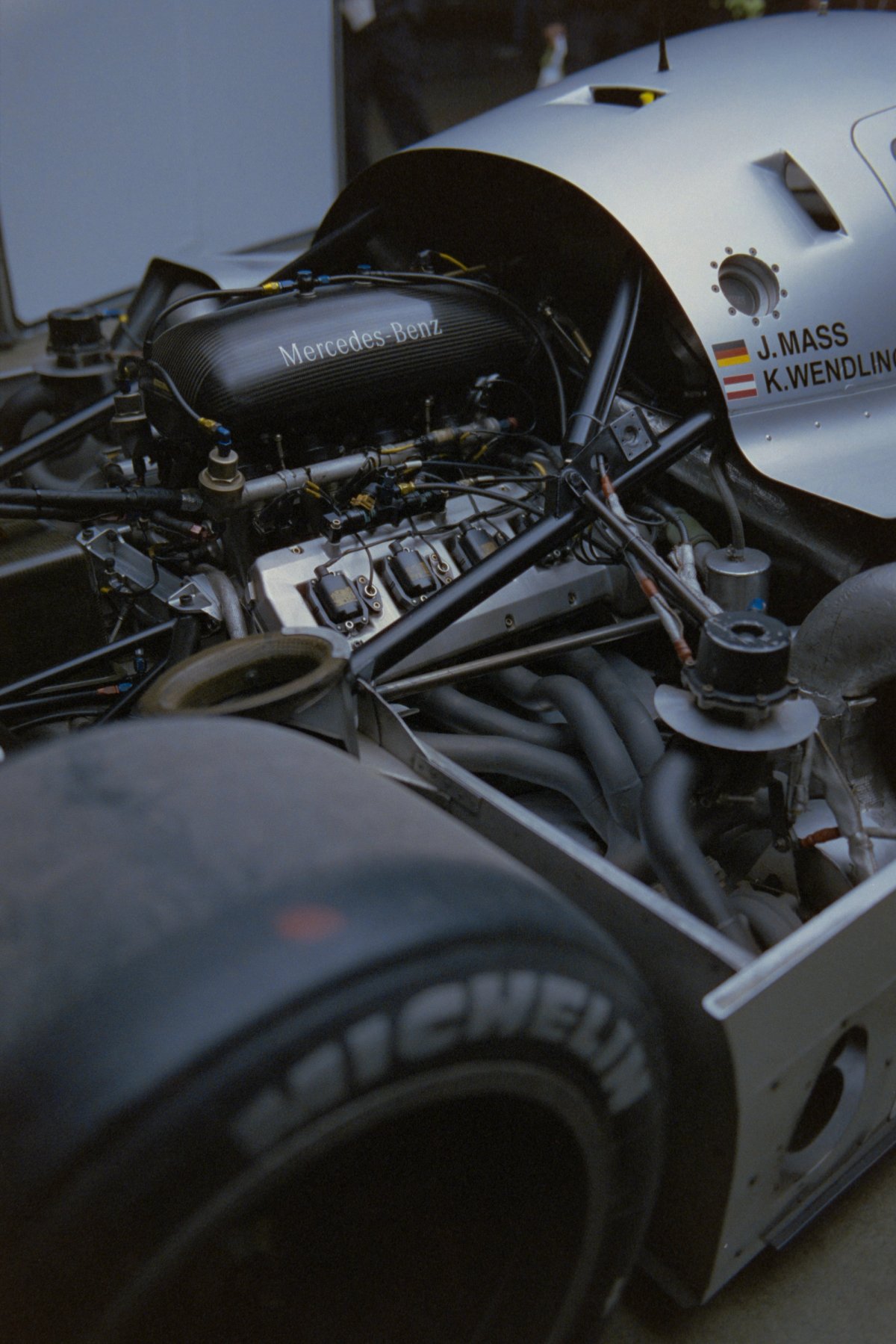
The Mercedes-Benz M119 engine is a five-litre, aluminium V8 with twin KKK turbochargers. In race trim, it produced 730 horsepower. In qualifying, when the engineers turned the boost pressure up to two bar, as much as 900. That much power in a car weighing 900 kilograms. Torque? 820 newton-metres, available from just three and a half thousand revs. That means even at a gentle pace, you had enough power under your right foot to tear the tarmac apart.
Top speed exceeded 370 kilometres per hour. On the long straights of Le Mans, there was talk of 400. But the real magic happened elsewhere. In the aerodynamics.
The C11 was the only Group C car tested in a wind tunnel with a rolling road, a belt running beneath the car at the speed of the simulated airflow. Why does that matter? Because cars of this class generated the majority of their downforce from the floor, not from wings. While the competition was guessing, Sauber's engineers knew exactly. The result? At 320 km/h, the C11 generated 26 kilonewtons of downforce. The car was literally glued to the tarmac by a force equivalent to the weight of two and a half tonnes. And all of this on a carbon monocoque built by the Swiss firm Nobrac. Read that name backwards.
Suspension? Double wishbones with dampers laid parallel to the ground, a solution that saved space and allowed for even more aggressive aerodynamics. Brembo brakes cooled by air ducts running from the front intakes directly onto the discs. A five-speed manual gearbox with Hewland internals in a casing designed by Mercedes. A marriage of Swiss precision and British racing experience.
But the most fascinating element was the electronics. In an era when computers occupied entire desks, the C11 had a Bosch Motronic engine management system and a data logger. Yes, in 1990 this car was collecting telemetry data. Except instead of displaying it on a screen, it spat out a paper tape of zeroes and ones. A binary record of what was happening inside the engine at three hundred an hour. The prehistory of telemetry, but even then Mercedes knew that the future of motorsport lay in data.
Martin Brundle, racing the Jaguar XJR-11, recalled: "On one insane lap we could keep up with them. But race them over a distance? We had no chance. More downforce, less turbo lag, better fuel consumption. Plus great drivers."
Nobody's perfect
- Nine rounds of the World Sportscar Championship. The Mercedes Sauber C11 won eight of them. "Nobody's perfect," as the famous Porsche poster declared after Le Mans 1983, where they took the first eight places. The irony is that the only non-Porsche in the top ten back then was a Sauber. Seven years later, it returned the favour.
That single defeat? Silverstone. And here the story turns bitter. The car driven by Jean-Louis Schlesser and Mauro Baldi had built a fifty-second lead after forty laps. Fifty seconds. In racing of this calibre, that's an abyss. And then the engine said "enough." A rare failure in an otherwise near-flawless unit. The Jaguars took over the lead. Mercedes lost its only race of the season not because it was slower, but because bad luck is democratic.
The remaining eight rounds? Domination. Absolute, ruthless, and quite frankly humiliating domination for the competition.
Interestingly, despite this form, the C11 never won Le Mans. In 1990, the famous twenty-four-hour marathon was not part of the championship calendar, so Mercedes decided not to enter. Officially, it was about focusing on the title. Unofficially, some historians suggest that the new carbon monocoque had not yet been fully tested for a twenty-four-hour ordeal. It remains one of the great "what ifs" in endurance racing history.
The young wolves
The Mercedes Junior Team. Three words that changed the face of motorsport. Jochen Mass, a Formula 1 veteran and Le Mans winner in 1989, became the mentor of three young Germans the world was about to get to know very well: Michael Schumacher, Karl Wendlinger, and Heinz-Harald Frentzen.
Mass was the ideal teacher. Calm, analytical, with the experience of 105 Grands Prix and one Formula 1 victory (Spain 1975) behind him. A man who survived a horrifying accident at Paul Ricard in 1982, when his car flew over the barriers and landed in a spectator area. He knew what risk was. He also knew how to pass that knowledge on to the young wolves without extinguishing their fire.
Schumacher made his C11 debut at Silverstone in 1990. And was promptly disqualified. His gear-change mechanism failed, the car stopped at the side of the track, and the mechanics, in a burst of enthusiasm, ran over to help. The regulations were merciless. Outside assistance away from the pits meant exclusion. Young Michael received an additional penalty for driving back to the pits without his belts fastened, which he himself disputed.
But then came Dijon. And Mexico, where Schumacher won his first race in the car. And in 1991, Le Mans. Schumacher's only start in the world's most famous endurance race. He shared car number five with Wendlinger and Fritz Kreuzpointner.
Wendlinger crashed the car on cold tyres, and they dropped to sixth. Then Schumacher got in and showed what he was made of. He broke the lap record. By five seconds. Five seconds around the Circuit de la Sarthe is an eternity.
They finished fifth, seven laps behind the winning Mazda 787B. Mercedes had terrible luck that year, as two other C11s retired due to cracked alternator brackets, which led to water pump failures. The cause? Absurd. The brackets had been anodised for the first time, to make them look nicer. The process made the aluminium brittle. Peter Sauber always said that a racing car must look beautiful. At Le Mans 1991, that philosophy was their undoing. Leo Ress, the chief designer, still recalls that race with bitterness. But the world had seen that this twenty-two-year-old German was someone special. A few months later, Flavio Briatore snatched him for Formula 1. The rest is history.
In May 2025, Jochen Mass passed away from complications following a stroke. He was seventy-eight. At the Goodwood Festival of Speed, Mercedes prepared a moving tribute. Flowers, Jochen's helmet, gloves, and boots placed beside the C11. The very same car you see in the photos in this article. Karl Wendlinger, who drove the car up the hill that year, said afterwards that the C11 is still the best car he has ever driven.
Chassis number 04
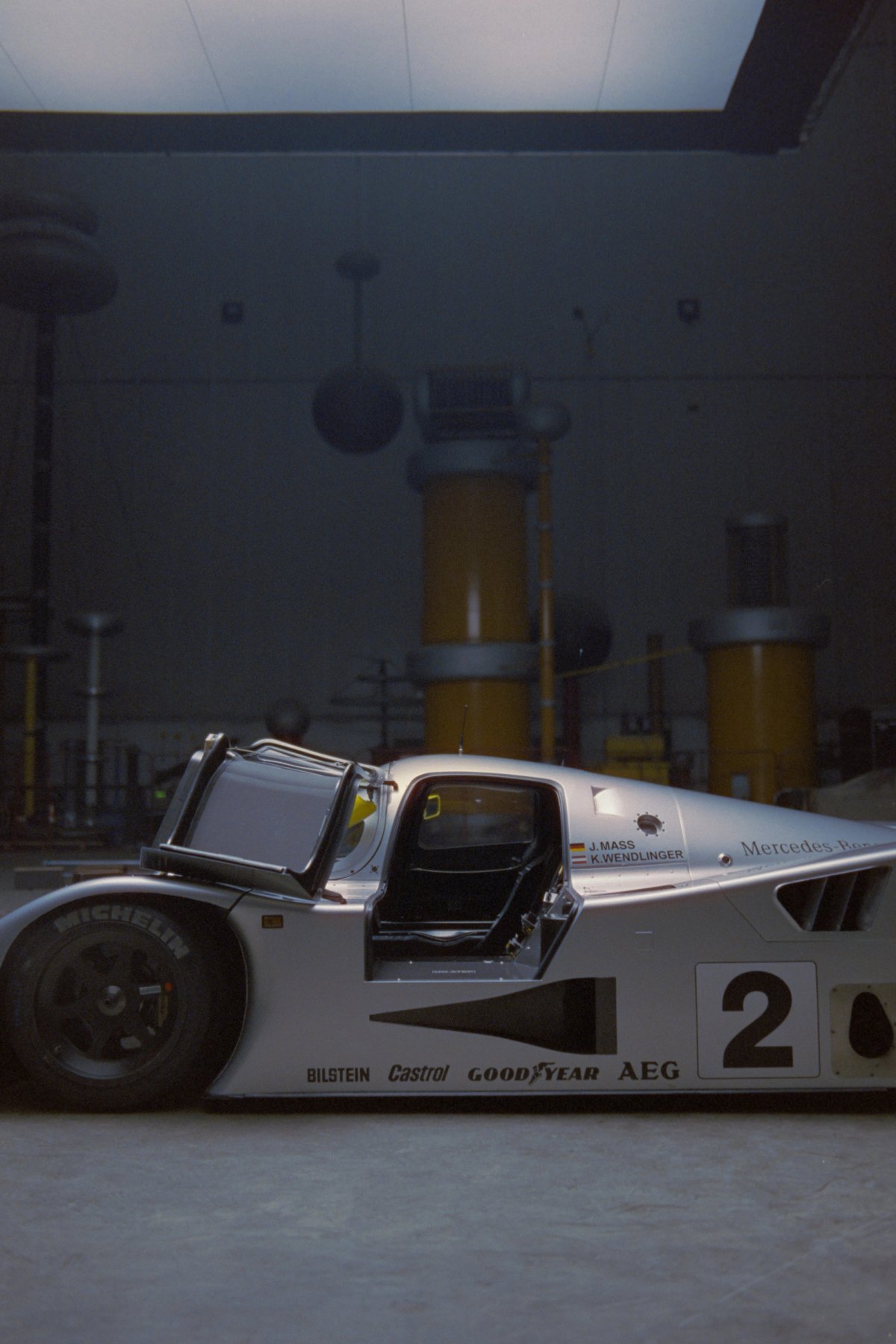
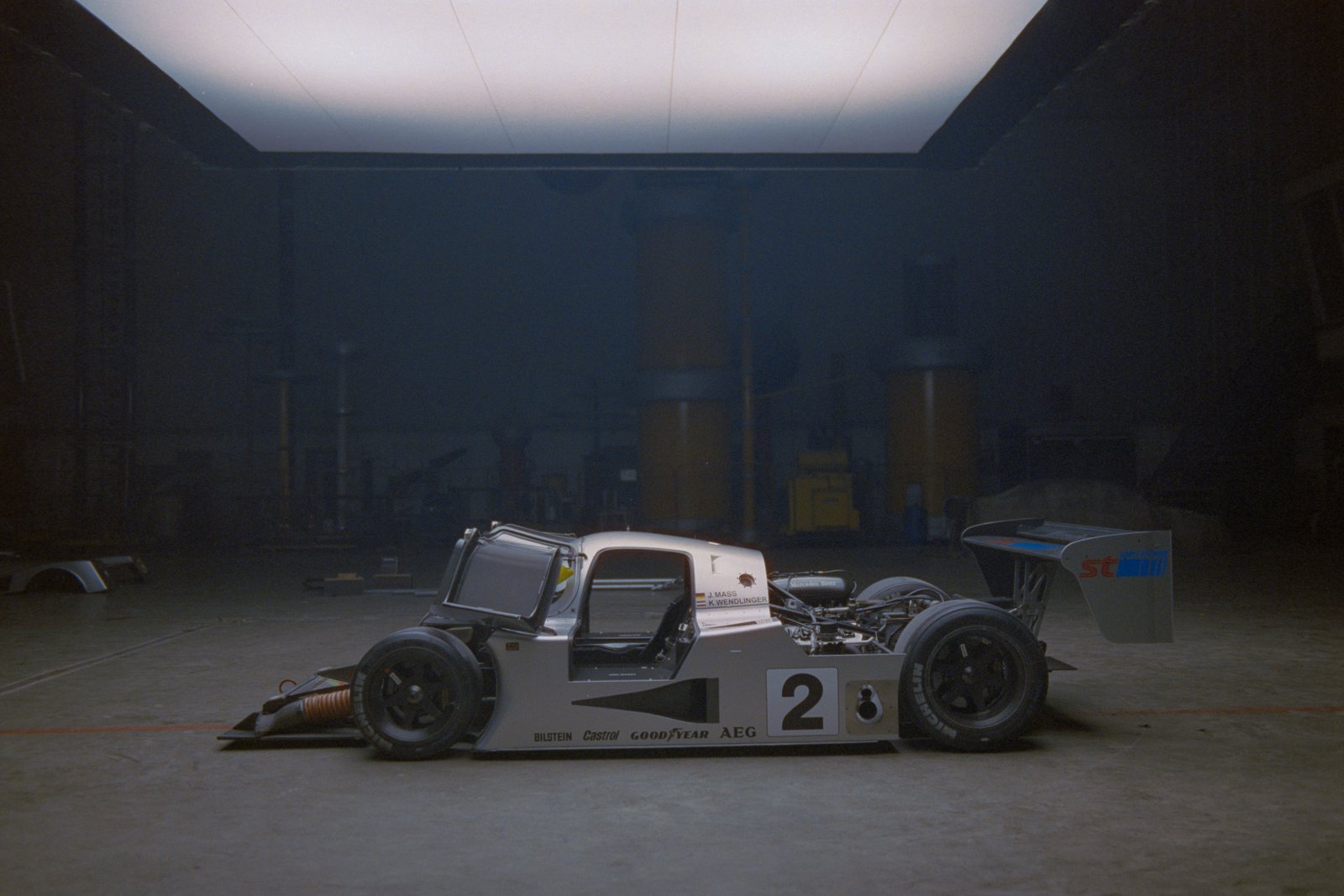
The car that stood in Warsaw's Instytut Energetyki has its own story. It is chassis 90.C11.04, side number 2. One of only five C11s ever built, and the only one that never left factory ownership.
Its racing career was... unlucky. Its debut was supposed to take place in the autumn of 1990 at Donington. Everything was going to plan until the warm-up before the race, when an electrical failure grounded the machine in the pits. It didn't start.
Then Montreal, ninth place with Mass and Wendlinger behind the wheel. For the rest of the 1990 season and the start of 1991, it served mainly as the T-Car, the spare waiting on standby in case of problems with the other cars.
And finally, Le Mans 1991. The fifteenth hour of the race. The engine gave up. A premature end. Chassis 04 did not finish the most important race on the calendar.
But it is precisely that misfortune that gives it character. This is not a car that won everything. This is a car that tried. That was part of a programme which changed history. In 2007, at the Goodwood Festival of Speed, Mass once again sat behind the wheel of his old car. A reunion of two old friends.
Dust and silver
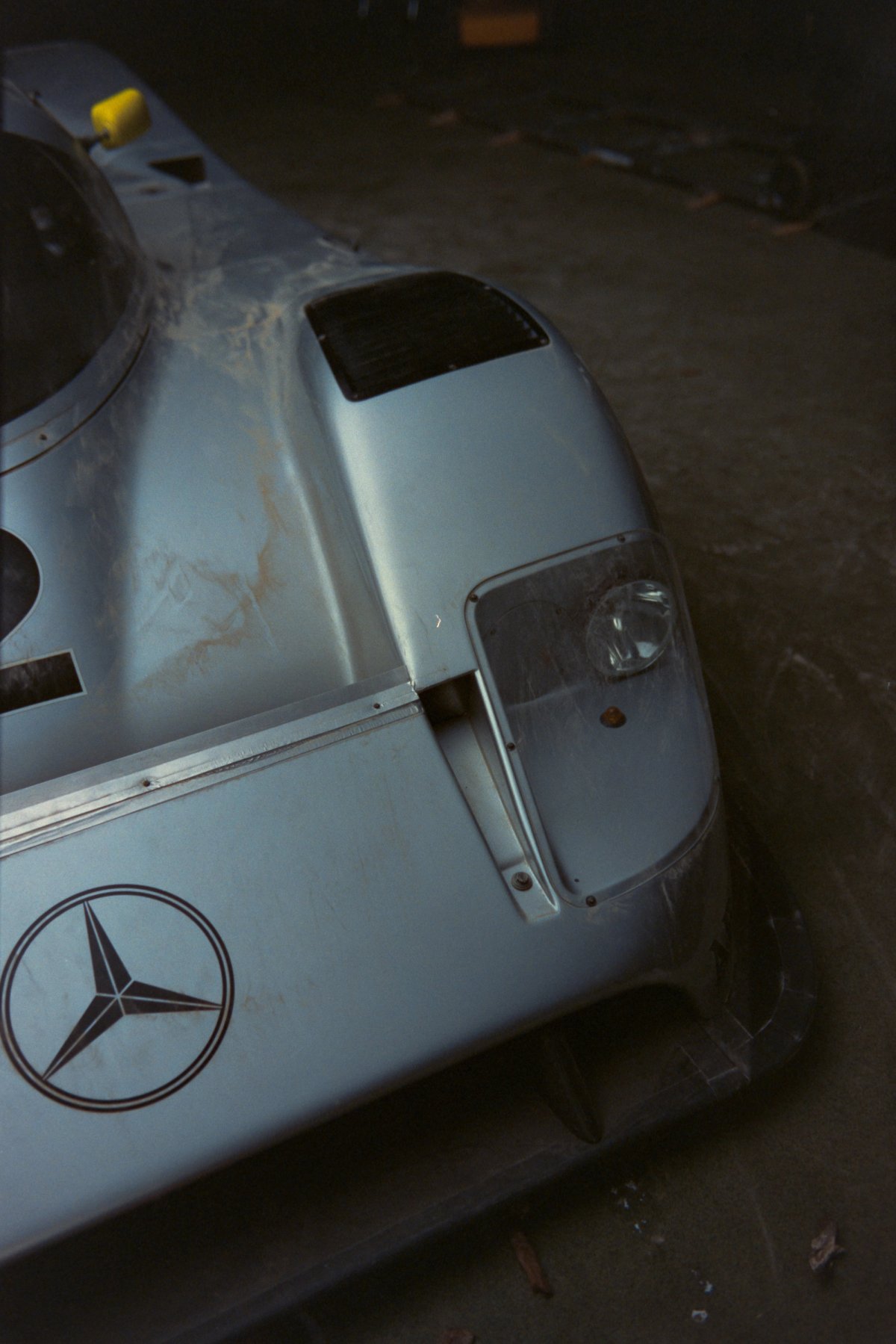
When the dust-layered sheet fell, the C11 looked like a mythical barn find. A forgotten wonder, waiting for years in the darkness to be discovered. That image, the contrast of industrial chaos and museum-grade elegance, is something you can't forget.
For two days, the film crew documented every angle, every detail. Dominik Panasiuk shot on 35 and 16-millimetre film. I also reached for a camera from the nineties, because a car from that decade deserves an analogue medium. Some things require proper treatment. Mercedes technicians removed engine covers, pushed the car into the right positions, and watched over every move.
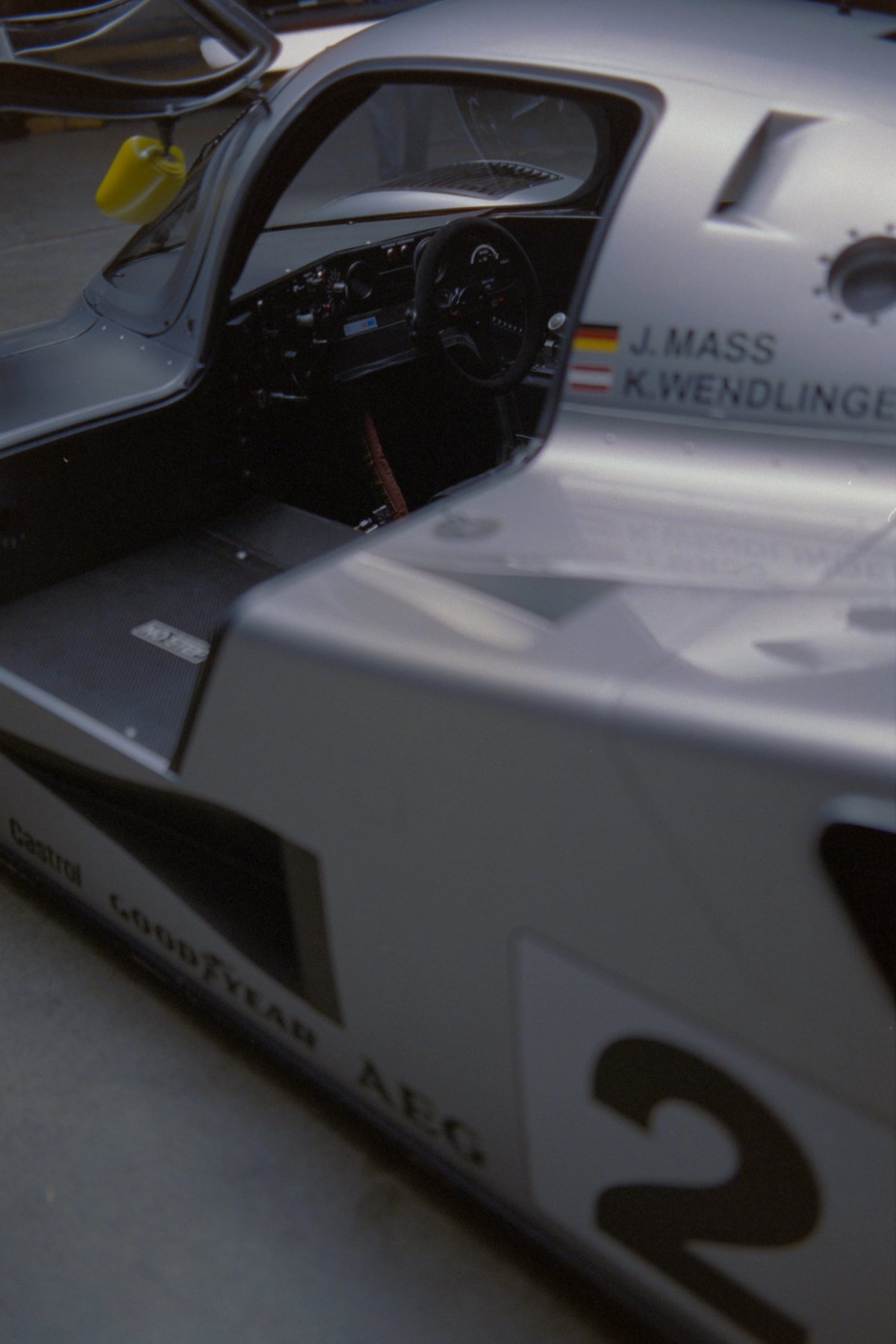
I had the chance to look inside the cockpit. Spartan in a way that modern racing cars might consider extreme. A minimum of switches. A steering wheel with no unnecessary additions. Everything subordinated to a single function. Go fast.
Without its bodywork, the C11 reveals its philosophy. A tight carbon cabin surrounded by mechanicals on every side. The engineers didn't design a car around the driver. They designed a machine and left a bit of room in it for a human.
Sitting there, I felt the weight of history. The same seats, the same steering wheel, the same pedals that Schumacher, Wendlinger, and Mass pressed. People who defined their era. The view from the cockpit is limited. A curved windscreen like a fighter jet's, mirrors in a vivid yellow-green, the only accent on the silver body. Behind you lurks five litres of fury ready to be unleashed.
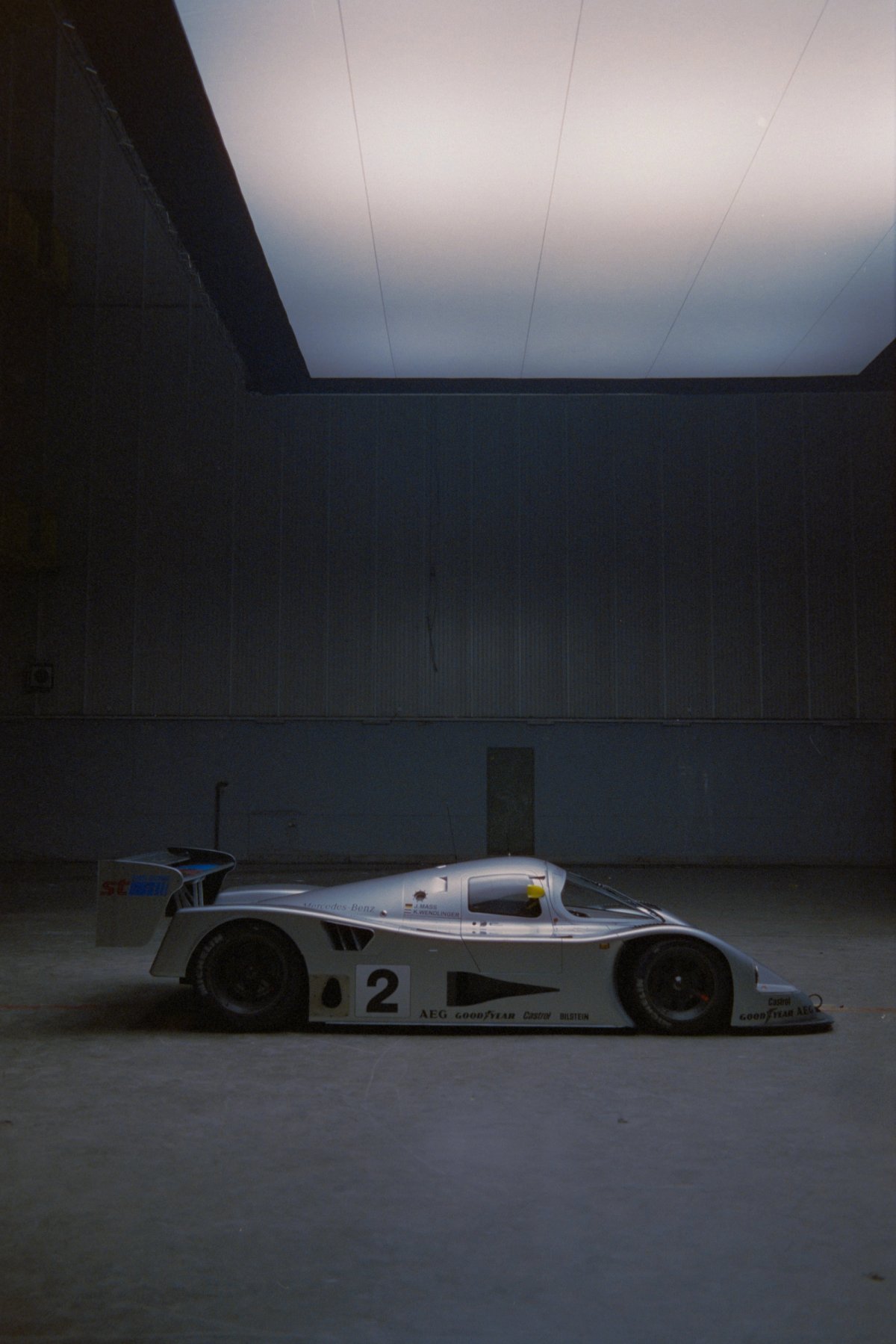
The aggressiveness of the design doesn't leave you even when the car is standing still. Low, wide, looking like a predator waiting for its prey. The nose sharply cut, the wheel arches swollen like muscles coiled for a leap, the rear wing rising above the engine like a warning to anyone who might want to approach from behind. Even covered in dust, even silent, it radiated an aura of absolute dominance. This is not a car that asks for attention. This is a car that demands it.
Legacy
Horacio Pagani, the creator of the Zonda, once said in an interview that his hypercar was inspired by "racing cars from the late eighties, when they were still elegant and romantic." He didn't mention the C11 by name, but one glance at the proportions of both machines is enough to understand what he meant.
The C11 is probably the most visually pure Group C car of all time. The lines flow without unnecessary additions, every gap has a function, and the whole thing looks as though it was sculpted from a single piece of metal by someone who understood both the laws of aerodynamics and aesthetics.
Sauber himself moved to Formula 1 in 1993. In 2005, the team was bought by BMW, opening a chapter with Robert Kubica. Today it is Stake Sauber, awaiting full transformation into a factory Audi team. From a Swiss garage through Le Mans to F1. A journey that began with a partnership with Mercedes.
And the C11s themselves? They're still racing. In historic Group C events, these machines regularly stand on the podium. At Spa in 2011, one of the cars qualified with a time that would have given it sixth place in the contemporary Le Mans series. A car over thirty-five years old, still faster than modern GTs.
At Le Mans Classic 2018, one of the C11s qualified in third place. On seven cylinders. A valve spring retainer had cracked in Barcelona, but nobody noticed through the tests at Brands Hatch and qualifying itself. "It wasn't until another driver got in and said something felt off that we did a compression test," recalls Steve Briggs from BBM Sport. "It wasn't a dramatic problem. It was simply running on seven cylinders." That's how powerful this machine is.
Epilogue
The dust has settled. The silver gleams once more.
The Mercedes Sauber C11 is more than a racing car. It is a symbol of return. Of the Silver Arrows after tragedy, of Mercedes into the fight for the highest stakes, of the Germans to the pinnacle of motorsport. It is the school that raised a champion. It is a machine that dominated so completely that the only way to stop it was mechanical failure.
And it is a car that for two days waited patiently for its moment before the camera. Just as it waited on circuits around the world thirty-five years ago. Ready. Confident. Legendary.
Some machines are fast.
This one is immortal.