
Operation: Unimog
What can you do in the middle of Norway, near Trondheim, in February? Buy a Unimog! But let's start from the beginning. Daniel has always had a soft spot for unique vehicles with patina. He regularly scours classified ad sites in Scandinavia, hunting for interesting cars. He had already owned a Unimog once before. This story begins on a Wednesday evening, when a conversation between two mates turned to Land Rovers. Daniel already had his Series III, and Michał was considering buying a 4x4.
"I'm browsing listings and looking for something 4x4, thinking about a project car... maybe a Unimog?" Michał began. "Well... there is this one..." Daniel replied.
That same evening they negotiated the price, checked flights from Gdańsk to Trondheim, which turned out to cost less than a taxi from Piotrkowska Street to the train station in Łódź. Tickets were bought.
The expedition to Trondheim
When checking the weather forecast for Trondheim, the app showed 4 degrees and sunshine. Reality proved harsher: through the aeroplane window, all you could see was ice and an all-encompassing white. The inspection of the Unimog took place outdoors, and its condition matched what the seller had described in the listing.
The Mercedes-Benz Unimog 404 is one of the most important designs in the history of off-road vehicles. Produced between 1955 and 1980, it served for a quarter of a century not only in the German army but also in emergency services, forestry, and agriculture around the world. Its secret lay in a unique construction: a ladder frame, portal axles on both axles providing enormous ground clearance, and the ability to mount a wide range of attachments.
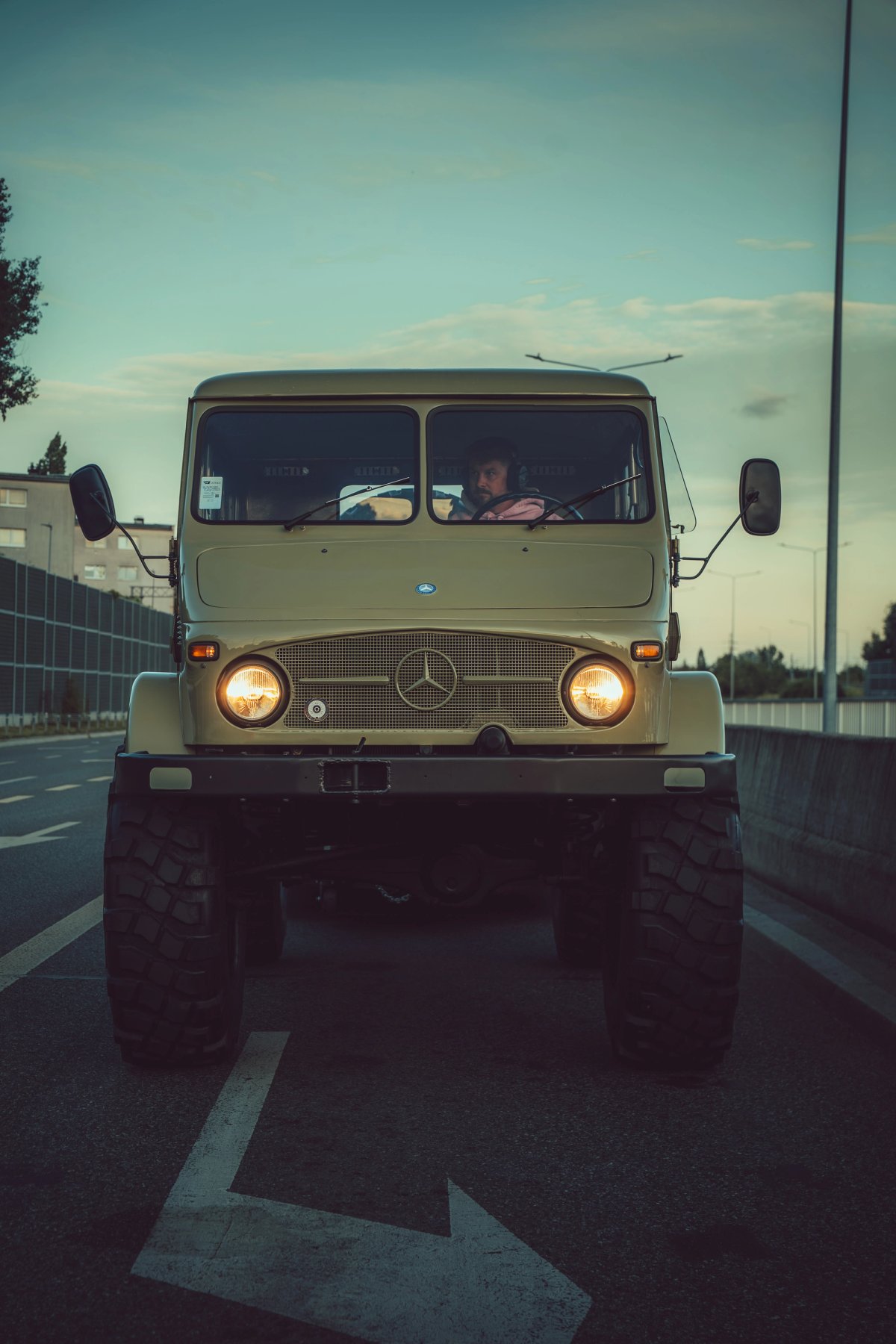
The subject of the purchase was a 1970 Unimog 404 S Doka. "Doka" is short for "Doppelkabine," meaning double cab, which makes this model particularly rare and sought after by collectors. Under the bonnet sat a 2.2-litre petrol engine producing 82 horsepower, perhaps not impressive by today's standards, but more than sufficient to conquer any terrain thanks to its fantastic torque and exceptional design. The Unimog 404 is a vehicle with ground clearance that allows it to tackle virtually any off-road obstacle. Finding a Unimog with a hardtop and a long cab is a real find.
After the test drive, the key question was asked:
"Can we drive this back to Poland on its wheels?" asked Michał. "Of course we can," Daniel assured him.
At that very moment, the fuel tank started dripping. The Unimog has two sixty-litre tanks connected at the top by a rubber hose, which had perished. What followed was a hours-long battle to find a replacement part on a weekend when the shops were closed. They drove from shop to shop with the seller, covering around a hundred kilometres. Eventually, a friend of the Norwegian opened his workshop for them, where they managed to patch the tank well enough for the vehicle to move. Michał became the proud owner of a Unimog.
Scandinavian flick
The return journey was gruelling. The Unimog had practically no tread on the front tyres. Driving through mountains, winding roads, and ice-covered plateaus was far from easy. The hardship was rewarded by the sight of wild moose running across the road. The Unimog was running on rear-wheel drive only, not full 4x4. An entire night of driving in those conditions while trying to catch a ferry to Świnoujście was demanding.
The first slide happened in the early morning, around six or seven. Michał gently lifted off the throttle on a bend and the car went sideways. It was a real, proper drift, Daniel recalls. After a wake-up call like that, they didn't need coffee. The second incident raised the adrenaline even further and was equally unexpected. This time they ploughed into a snowdrift, but fortunately, by engaging 4x4, they managed to get out of trouble.
Conditions were extreme even by Norwegian standards. The Unimog 404, although designed as a universal vehicle, demanded particular caution on icy surfaces. Its high centre of gravity, an advantage off-road, could become a liability on slippery roads. "We drove practically half of Norway with four-wheel drive engaged, because on bald tyres there was simply no other way," Daniel recounts.
Things only got harder from there. They reached a point where the road had been washed out and the surface torn away. Approaching a checkpoint, a policewoman came out and informed them that the road wouldn't be passable for another week, and the only alternative was a mountain pass "for the very brave." They looked at each other and chose the mountain road. The Unimog rose to the challenge.
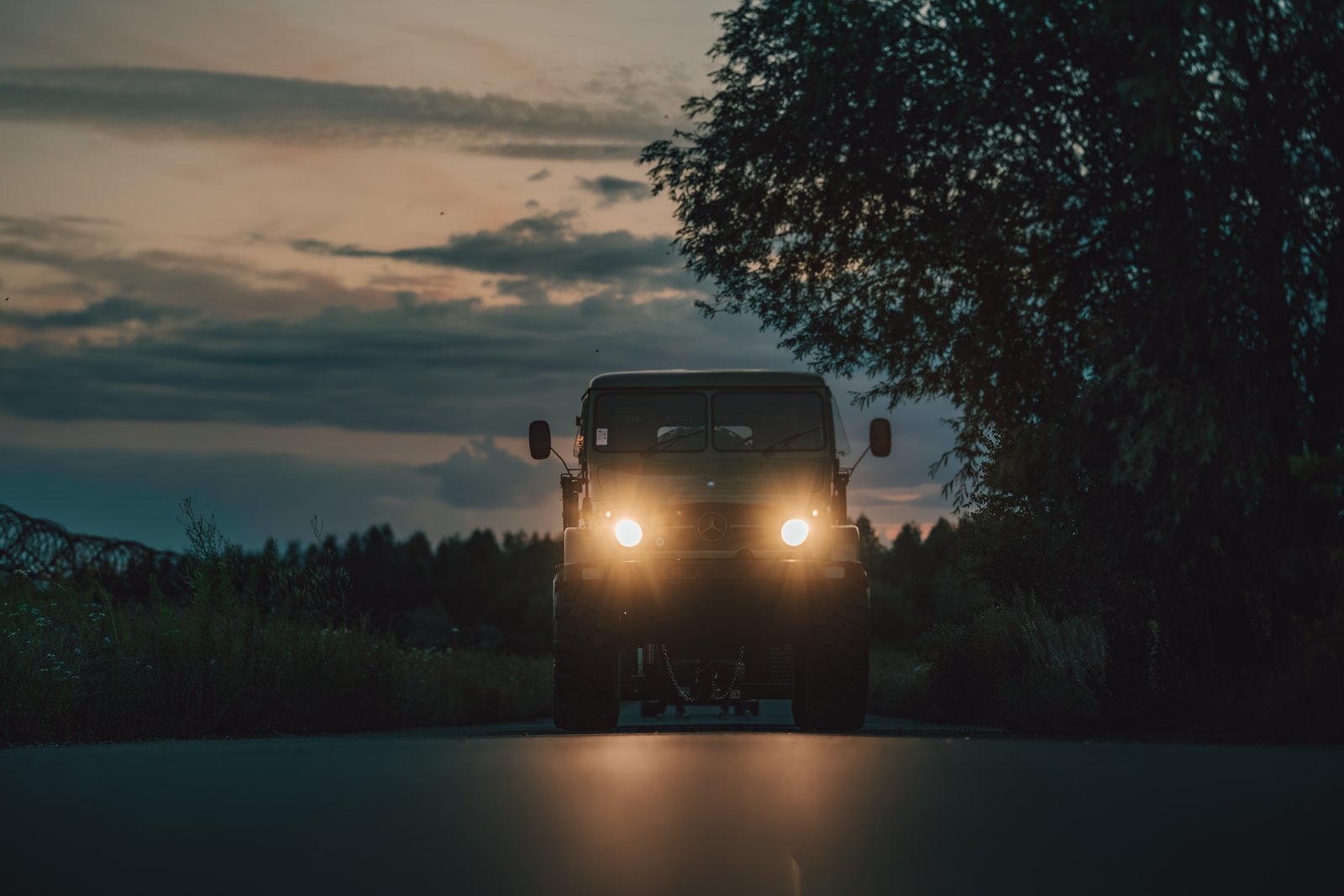
When they finally reached Świnoujście, they drove off the ferry and went to grab something to eat in Międzyzdroje. Around 4 pm they returned to the Unimog, only to find it wouldn't start.
"Maybe I left the lights on?" Michał wondered.
The problem was serious: the vehicle runs on 24 volts, so finding someone with a booster was next to impossible.
After a first call to a local shop, the owner pointed them to a friend who drove a taxi. For a few hundred złoty, he jump-started the vehicle. Unfortunately, on the road, something began to smell. Because of the rain, they had the wipers and heating running (which barely heated at all), and every gap in the cabin had to be sealed with tape they'd bought along the way.
The alternator had burned out. As long as there was daylight, they kept going, but after an hour and a half, dusk began to set in. February means short days, and the vehicle was rolling down the motorway without lights. It was practically invisible, and oncoming traffic was already flashing them. In the end, there was no other option: the Unimog covered the last kilometres to Łódź on a flatbed.
Modifications and plans
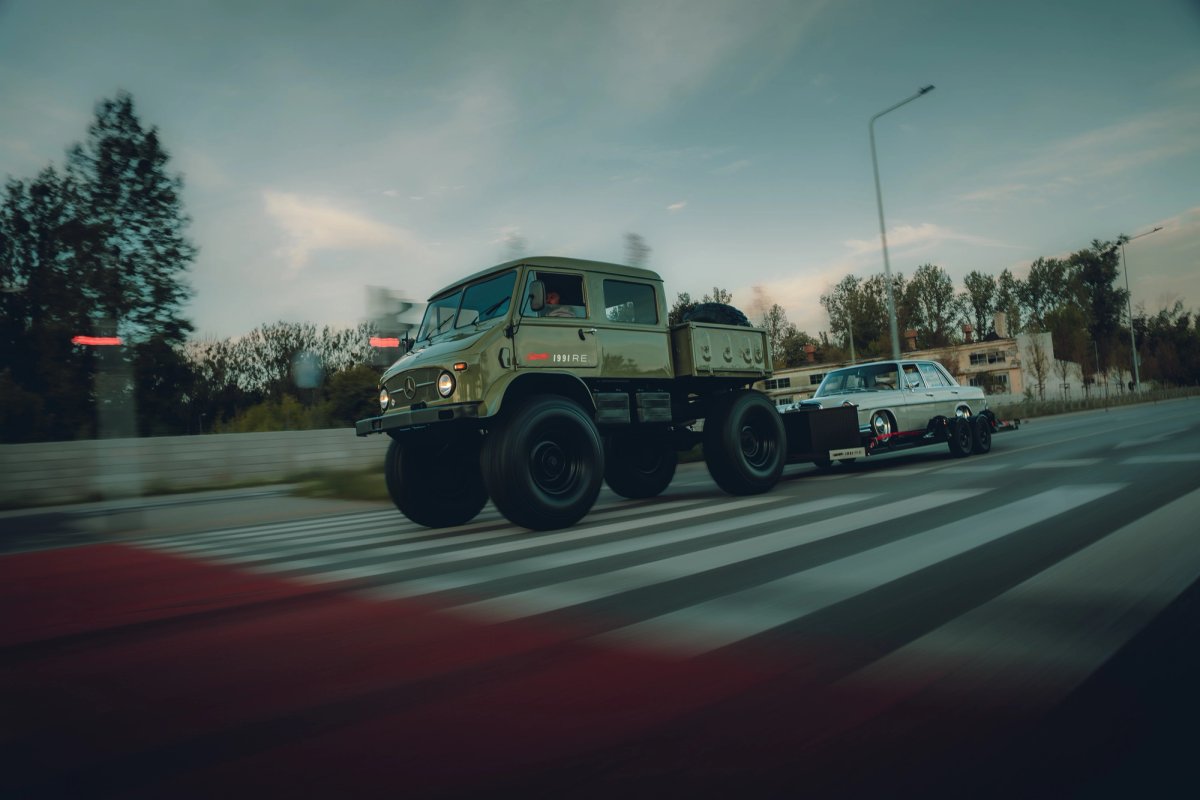
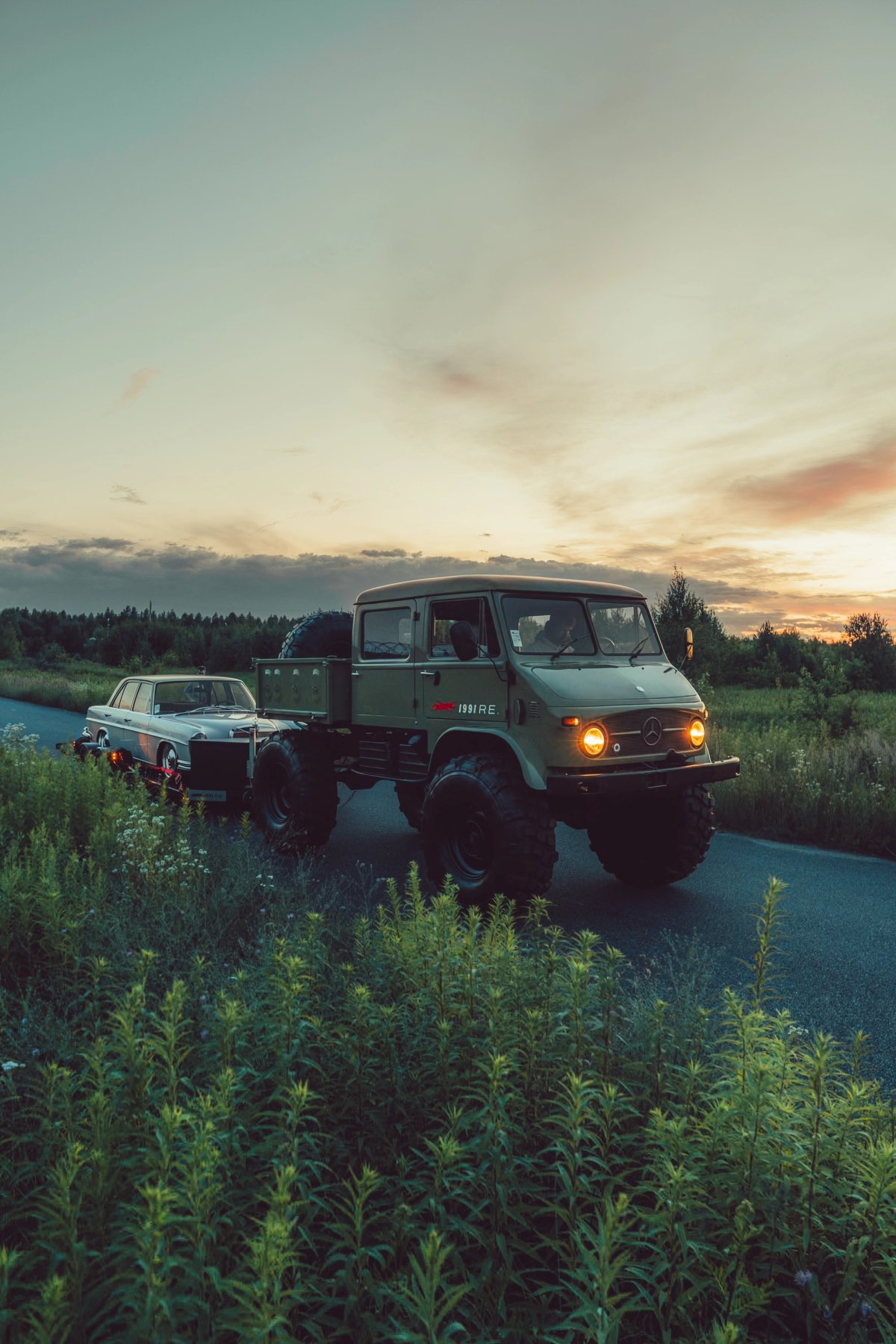
Once back in Poland, it didn't take long to decide: a full modification plan was drawn up. A basket rack was welded, the bed was shortened, a lift was done, and practically everything was repainted. The frame was refreshed, the wheels and bumper powder-coated. The cab was left in its original state, as it was in decent shape, it just needed a thorough polish.
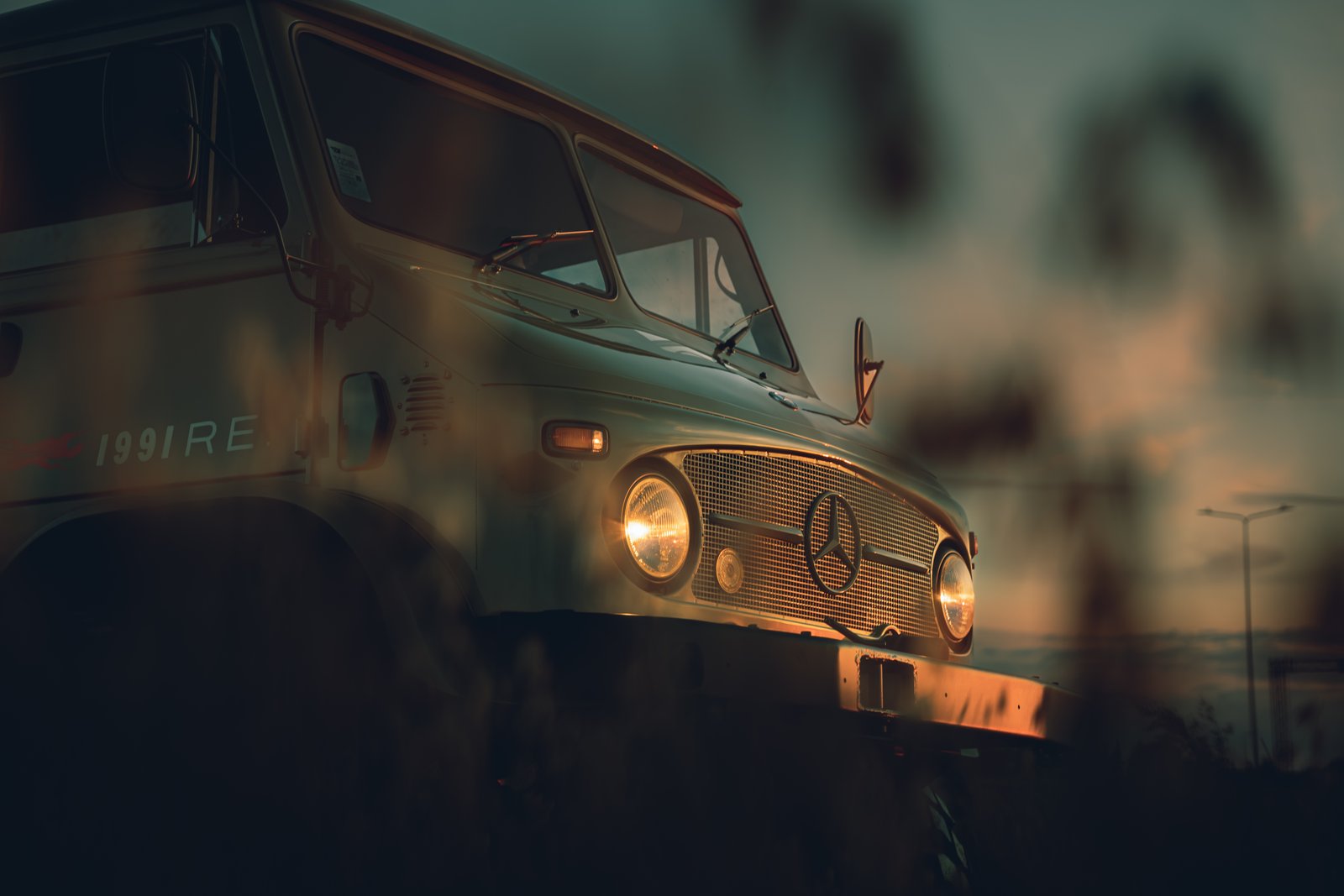
The bed required the most work, as it had to be shortened to suit the vehicle's new proportions. The entire surface needed a fresh coat of paint. Basket racks and mounting points were welded and adapted to the new requirements. It was demanding metalwork, but the result was worth it.
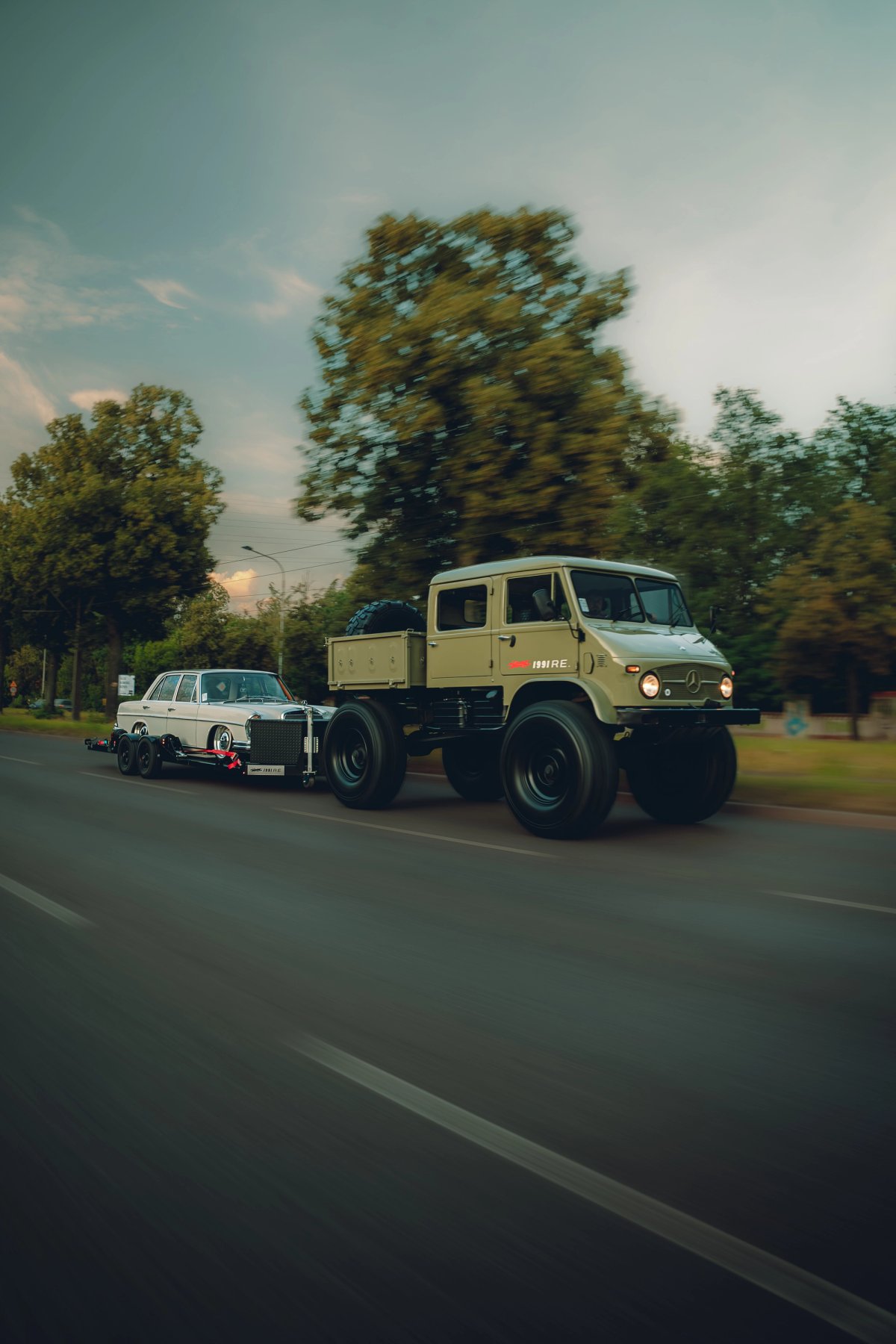
The real challenge turned out to be the trailer for the W108. The Unimog has a tow hitch mounted very high, while the trailer was designed as a low platform, ideal for transporting low-slung cars. This meant the drawbar had to be completely reworked. New elements were laser-cut and the connection was redesigned to adjust the height. It was custom work carried out right down to the wire: practically two days before leaving for Ultrace, the entire 1991Rework team was battling with the trailer to make everything come together.
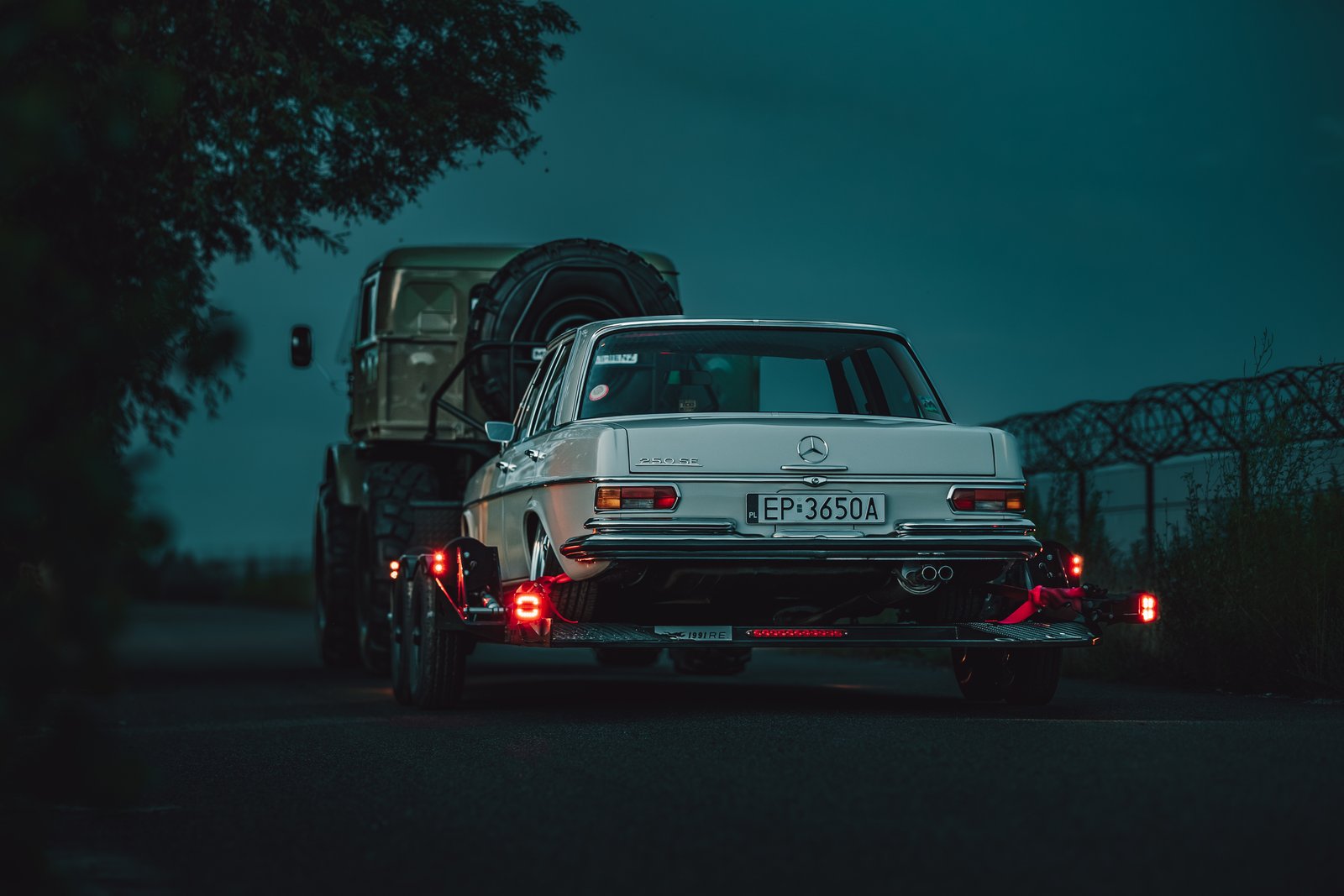
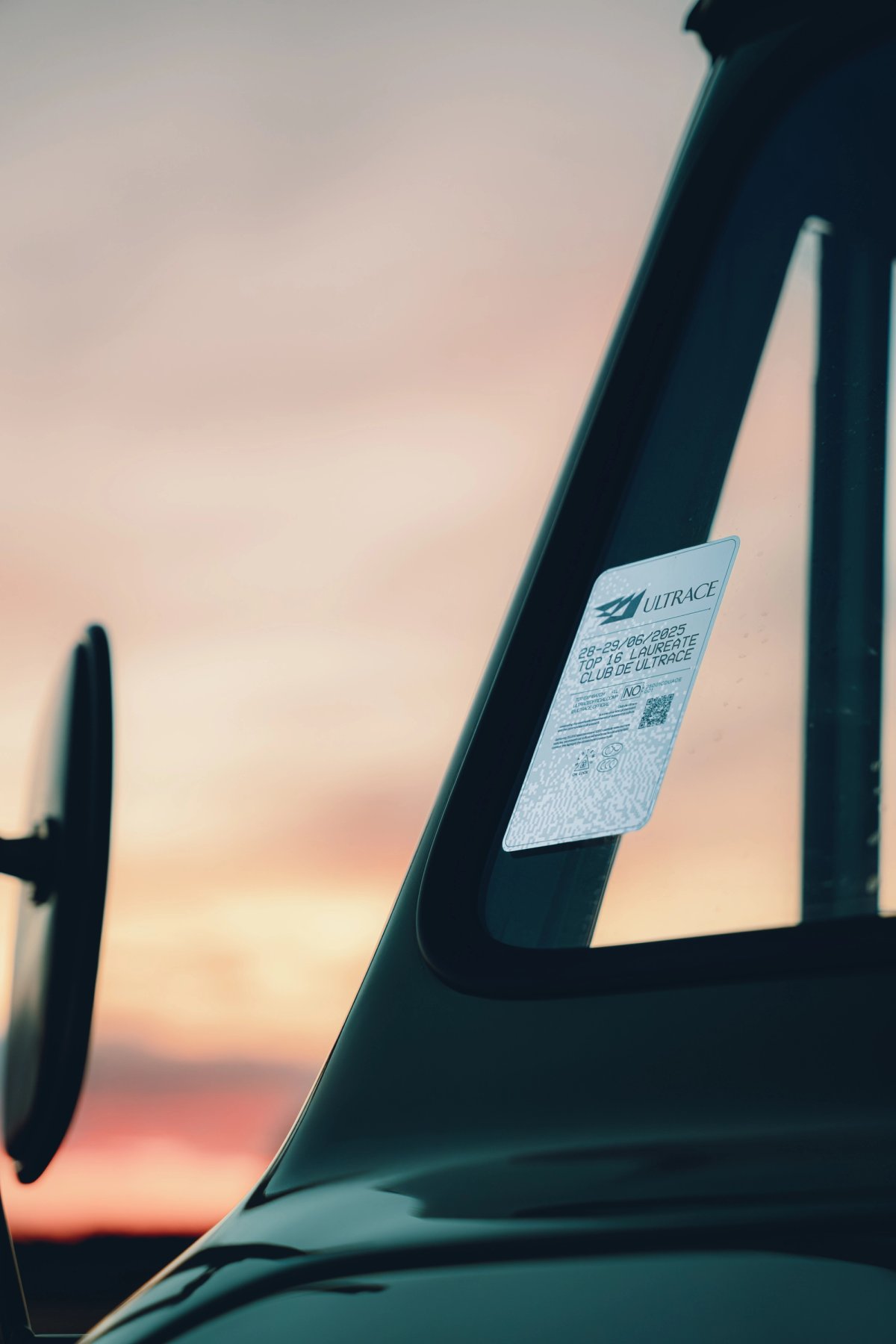
The original engine has just 82 horsepower, and the vehicle had gained new oversized wheels weighing 130 kilograms each. The vehicle struggled, and the journey from Łódź to Wrocław was significantly slower and longer than usual. The effort was rewarded, however, and at this year's Ultrace 2025, the car was honoured in the Top 16 by the international jury. The recognition of the Unimog shows that Ultrace is not only about low cars on cambered wheels: the idea, the story, and the uniqueness matter just as much.
The plan for the future is ambitious. By the end of July, a 3-litre turbodiesel from a W123, designated OM617A, which was brought from Norway along with the Unimog, is set to be stripped down. It will be completely rebuilt, and a special mounting plate, which positions the engine at a 5-degree angle relative to the original, will allow for a plug-and-play installation. By autumn, the Unimog should be making around 250 horsepower, and that's when it will truly show what it's capable of.
The birth of 1991Rework
Three friends, Daniel, Michał, and Marceli, decided to join forces and create a space open to genuine car enthusiasts. Each of them had been part of the scene individually for a long time and had proven their knowledge of cars. Now they share a common goal, and shortly after the Unimog purchase, they founded 1991Rework.
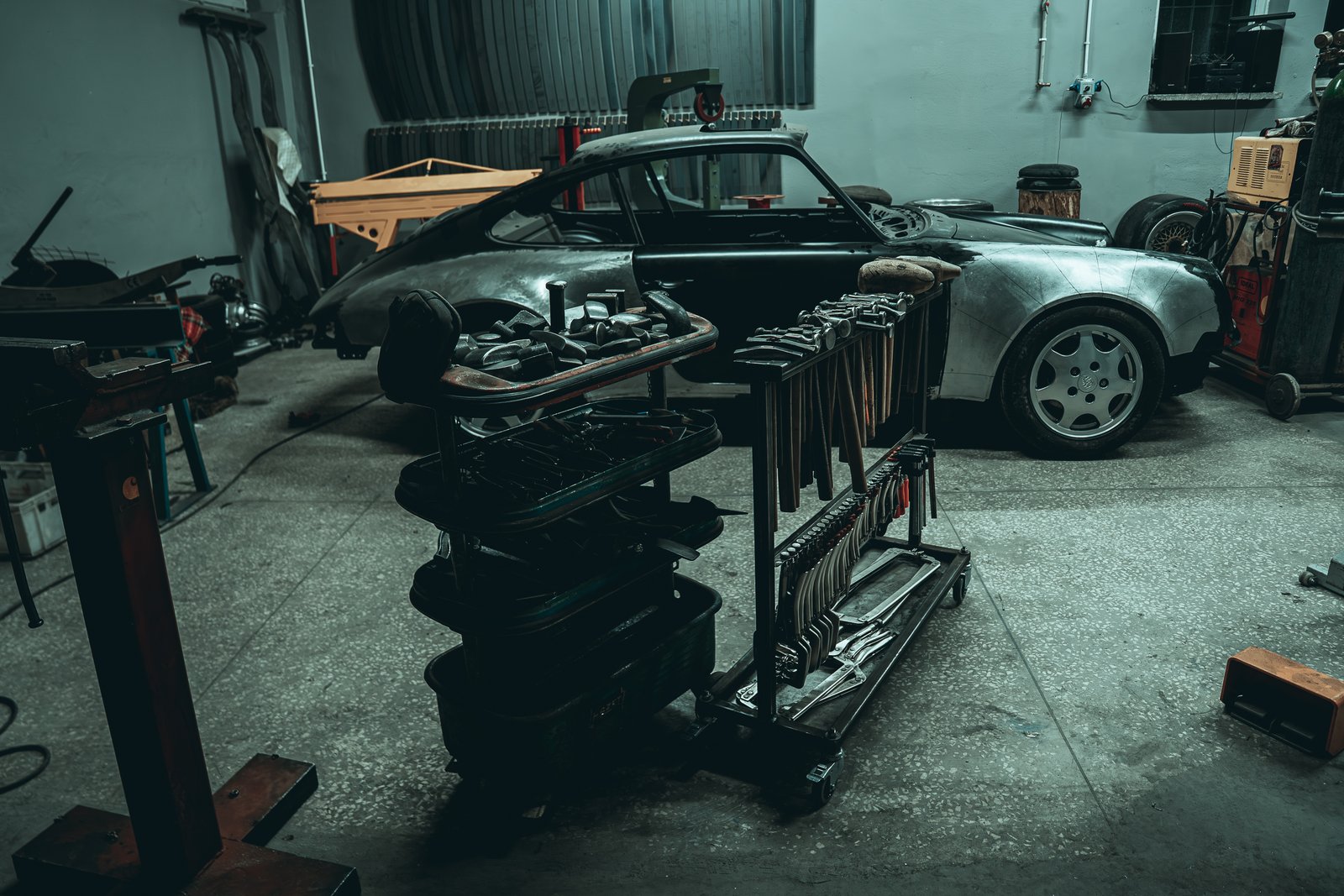
The company was established in April 2025, two months after buying the Mercedes in Norway. 1991Rework is not just a workshop but a comprehensive approach to building cars. The team numbers over a dozen specialists, including experienced metalworkers, upholsterers, and other masters of their craft who have joined the crew. They have a full technical facility and no shortage of ideas.
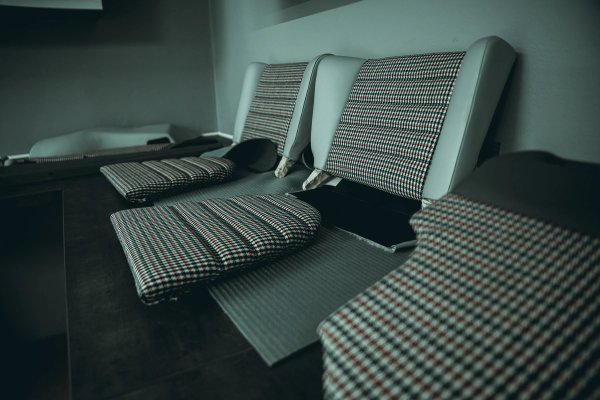
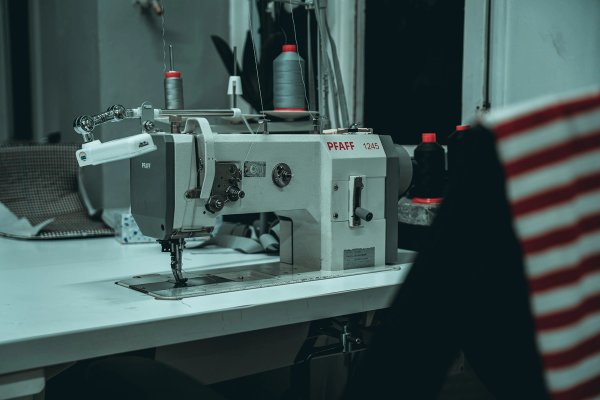
The philosophy is simple: help owners, not only of classic cars, bring their dream projects to a world-class level. It's not about quick and cheap repairs, but about building vehicles worthy of representing the Polish car scene abroad. The Unimog with the trailer and the W108 is just the beginning. Several other interesting projects are already waiting in the workshop, ready to see the light of day in due time.
Next year at Ultrace, they plan to bring something new, aiming to show that the Polish car scene has a great deal to offer the world.
The story of the Unimog from Trondheim proves that a true automotive passion knows no borders, neither geographic, nor weather-related. It's proof that making dreams a reality requires courage and determination, and sometimes a touch of madness.
Special thanks to Robert Kaniewski for the incredible photography that brought this story to life.